Atuabo · Ellembelle District · Western Region · Ghana
The Eastern Nzema Traditional Area
A kingdom of the old Apollonia coast. The birthplace of Kwame Nkrumah. Seventy kilometres of Atlantic shoreline, and a people who have governed it for centuries.
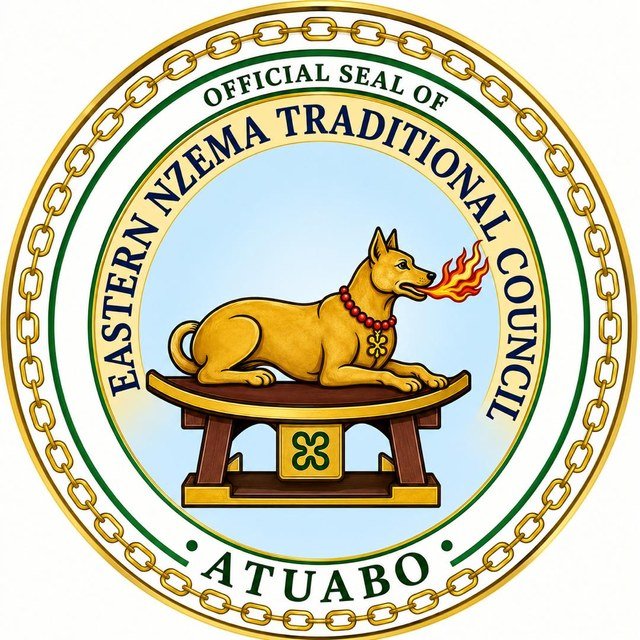
Everything the Council is, is written on its seal. Touch a marker to read each element.
1 / 5
02
The Omanhene
The paramount stool of Atuabo, held within the Ndweafo royal house — one of four Nzema paramountcies of that clan, alongside Beyin, Nsein and Bamiankor.
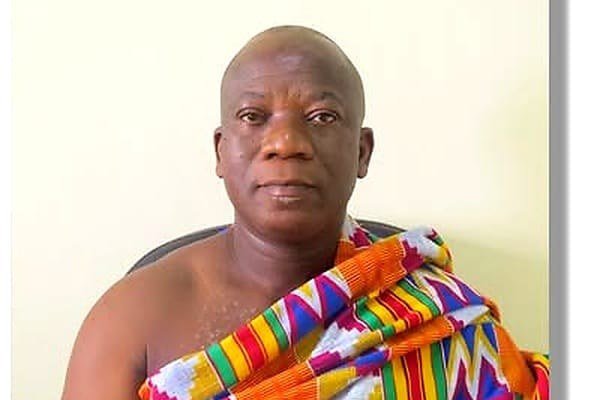
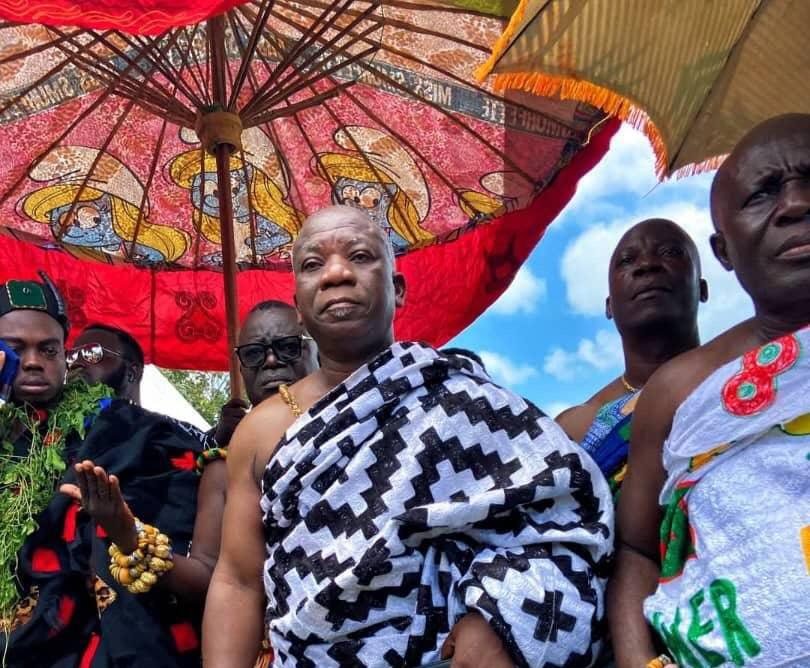
Official portrait — National Register of ChiefsBeneath the state umbrella at a durbar
Eastern Nzemahene
Awulae Amihere Kpanyinli III
Paramount Chief of the Eastern Nzema Traditional Area and President of its Traditional Council, Atuabo
Enstooled 13 June 2010Vice President · Western Regional House of ChiefsFormer board member · Ghana National GasNational Register of Chiefs · Serial 1152
There can be no development without proper spatial planning.
Kundum durbar, Atuabo
A reign that has run exactly alongside the industrialisation of this coastline. Enstooled in 2010, four years before the gas plant came on stream, he has argued the same case ever since: that development must be planned before it is built, that land must not be taken without process, and that the sea and soil which fed this people for centuries must outlast the decade that monetises them.
National Register of Chiefs — certified extract
Title of office
Ɔmanhene
Traditional area
Eastern Nzema · Atuabo
Stool name
Awulae Amihere Kpanyinli III
Date of enstoolment
13 June 2010
Approved by the National House of Chiefs
23 March 2011
Serial number
1152
Chieftaincy Bulletin
Vol. 2, No. 1 — November 2015
Predecessor on the stool
Awulae Blay VIII
Certified true copy of the entry in the National Register of Chiefs, issued under the hand of the Registrar, National House of Chiefs, Kumasi, 5 August 2025.
2003
The stool falls vacant. The National Register records the death of Awulae Blay VIII, Omanhene of Eastern Nzema, on 8 January. The next entry against the Atuabo paramount stool is made seven years later.
2010
Enstooled as Eastern Nzemahene on 13 June. Within weeks, the District Assembly and the Member of Parliament call on him to convene the traditional area's factions and settle its internal disputes.
2011
The enstoolment is approved by the National House of Chiefs on 23 March and entered in the National Register of Chiefs at serial 1152.
2014–16
The Atuabo gas plant comes on stream in his front yard. He sits on the board of Ghana National Gas — the host community's Omanhene at the table of the national gas company.
2015
Sets the Kundum theme "Tradition, our heritage — Sustainable Economic Development through the protection of our environment," and uses the durbar to demand spatial planning for Atuabo.
2019
The Council declares the customary ban on drumming and noise for the Kundum circuit — from Asanta on 29 September to the Atuabo climax on 27 October.
Throughout
Leads a public campaign against land grabbing, presses for regularised lease agreements on behalf of the Council, and pushes for dedicated scholarship quotas for Nzema youth.
03
A Council, not one man
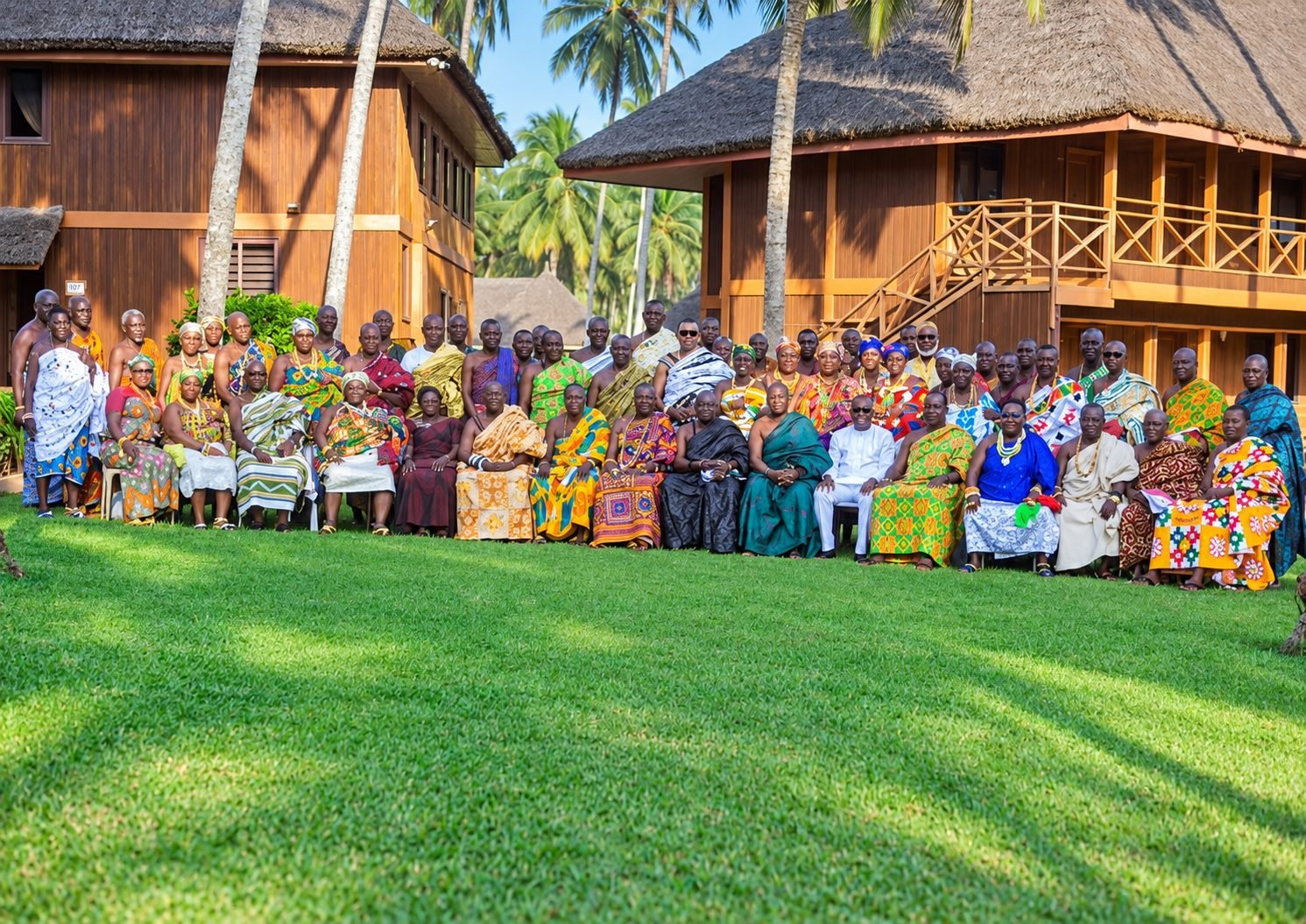
Divisional chiefs, town chiefs, queen mothers and linguists. The stool speaks through a structure that has functioned since before the colonial period — and it is the structure, not any one office, that holds the land in trust.
Chiefs and queen mothers of the traditional area in full regalia.
Holder of the ebia kpole, the great stool. Presides over the Traditional Council, is the ultimate customary custodian of the land, and represents the traditional area in the Western Regional and National Houses of Chiefs.
Heads one of the divisions of the traditional area. Divisional chiefs sit on the Council, hold land within their divisions — it was a divisional chief who transferred land to the District Assembly for the Aiyinasi market — and collectively constitute the check on the paramount stool.
The chiefs of the towns and villages along the coast and inland — Atuabo, Esiama, Aiyinasi, Eikwe, Kikam, Asasetre, Sanzule, Teleku Bokazo, Nkroful and the rest. The first point of contact for anyone working in a community.
Keeper of the genealogies, and in a matrilineal society that makes her the keeper of legitimacy itself. She knows who descends from whom, and therefore who may sit on which stool. Usually the sister or the mother of the chief.
The kpɔmavoli is the chief's voice — nothing is said to the stool directly, and nothing comes from it unmediated. The tufuhene is the principal adviser, an office rooted in the Asafo military companies.
04
Seventy kilometres of coast
From the Ankobra estuary in the east to the edge of Jomoro in the west. Touch a place to read it — or take the tour.
EnergyHeritage & natureTown
05
Kundum, and the words for it
Harvest thanksgiving and cleansing. A hunter is said to have come upon forest spirits dancing in a circle, and brought the dance home. It travels town by town, and it finishes at Atuabo.
Until the Atuabo climax
—Days
—Hours
—Minutes
—Seconds
The circuit moves each year. The Traditional Council sets and announces the dates; this counter follows them.
Asanta — the circuit opensLate Sept
Customary ban on drumming and noise beginsSame day
Nightly drumming at the siedu groundsWeeks 1–3
Avudwene — the young men's songs of licensed satireThroughout
Grand durbar at Atuabo — the Omanhene in palanquinClimax
Nzema — tap a word
A Kwa language of the Bia branch, close cousin to Baoulé, with roughly 430,000 speakers and a 25-letter alphabet carrying Ɣ ɛ and Ɔ ɔ.
Pronunciations are given as an English-speaker's approximation.
06
What this coast could become
Not a prospectus. A statement of what is already here, and what a serious partner could build on it — alongside a Council that holds the land and can convene the communities.
Energy & industry
The nation's gas comes ashore here. The plant, the receiving facility at Sanzule and the compressor station all sit inside the traditional area, and the ground for the next expansion is already held.
Host community for Ghana's gas midstream
Skilled-trades and technical training gap
Local supply and services largely unbuilt
The coconut belt
The Nzema districts carry the great majority of Ghana's coconut crop, and most of it still leaves as raw nuts. The value — oil, fibre, shell, water — is being captured somewhere else.
Processing and cold storage
Replanting against Cape Saint Paul wilt
Rubber and cassava alongside it
The blue economy
Thirty-one landing beaches, one of the strongest marine fishing districts in the country, an estuary fishery on the Ankobra with its own management plan — and almost no landing infrastructure.
Landing sites and cold chain
Aquaculture, effectively untouched
Mangrove and turtle conservation
Heritage tourism
Nkrumah was born at Nkroful, and his restored birthplace reopened in 2025. The coast has beaches, forest reserves, a crocodile pond and a festival. What it does not have is places to stay.
Coastal lodging and hospitality
The Nkrumah circuit, properly interpreted
Festival and diaspora travel
Young people
A young, largely rural population next door to a national industry, and the nearest industry-relevant training seventy kilometres away. Every serious partner here starts with the same question.
Technical and vocational capacity
Scholarships the Council already champions
Local content that actually reaches the coast
A Council that convenes
Customary land, community consent and local legitimacy all run through one institution. Partners who begin at Atuabo begin with the people who can actually bring the towns to the table.
Customary land and lease process
Community engagement and grievance routes
A single, accountable point of entry
07
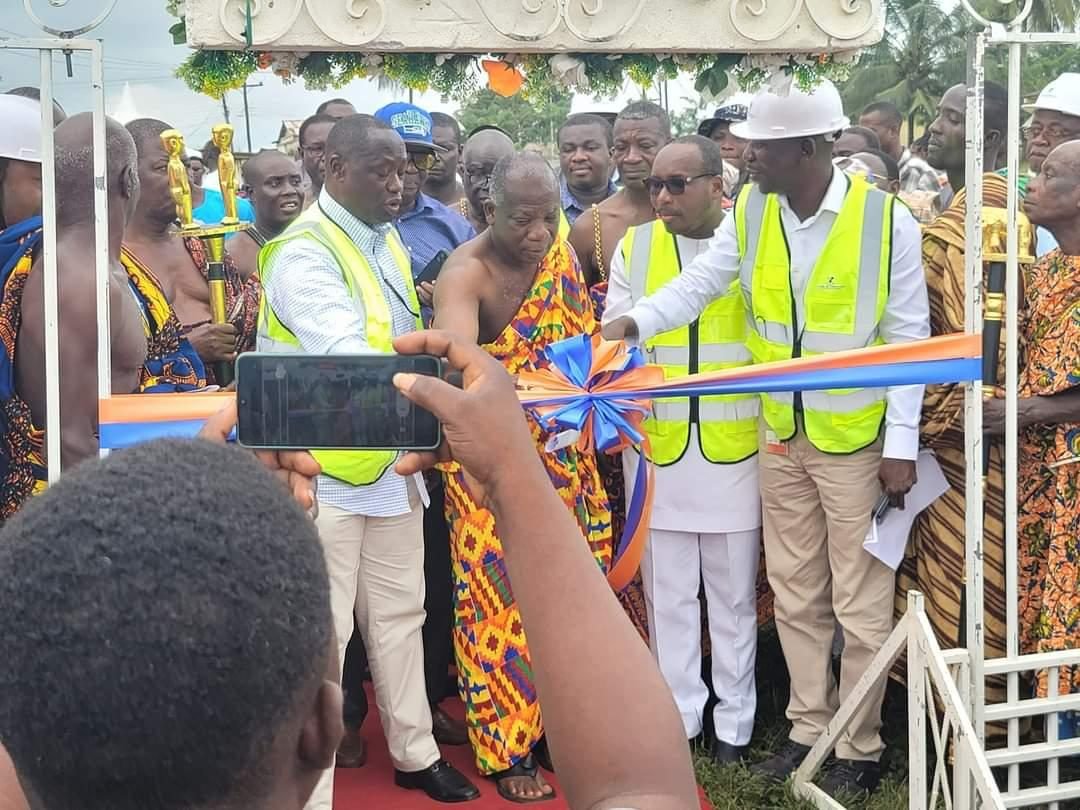
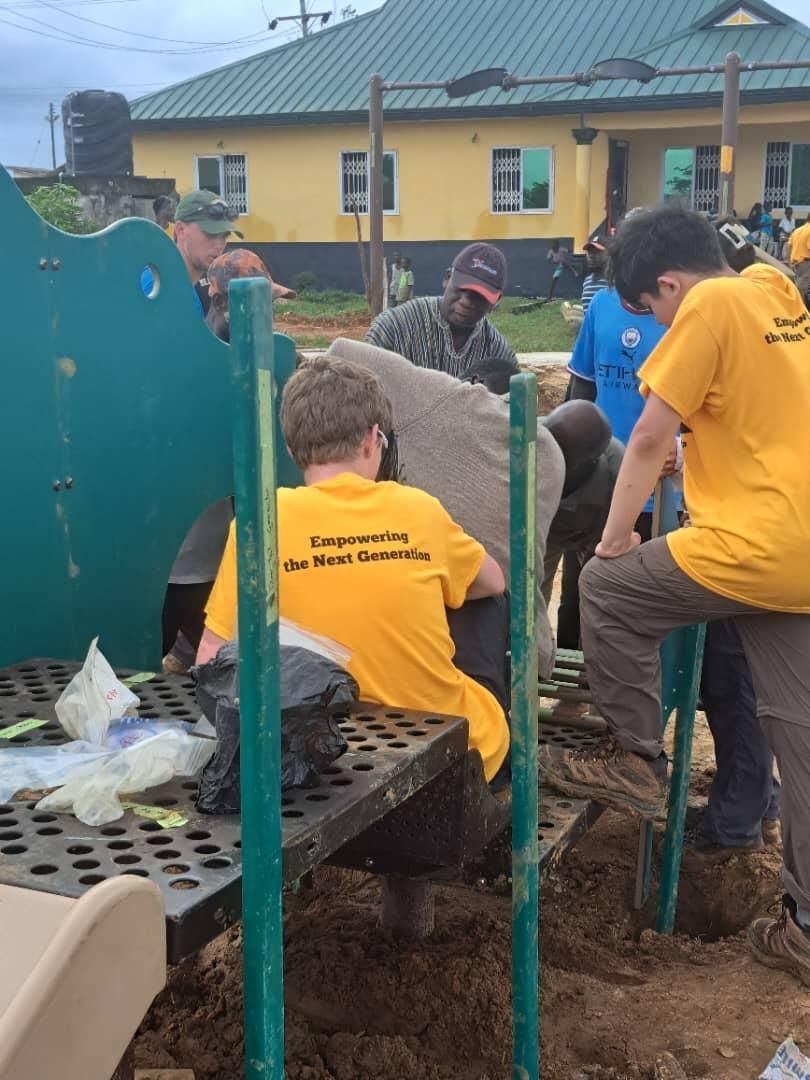
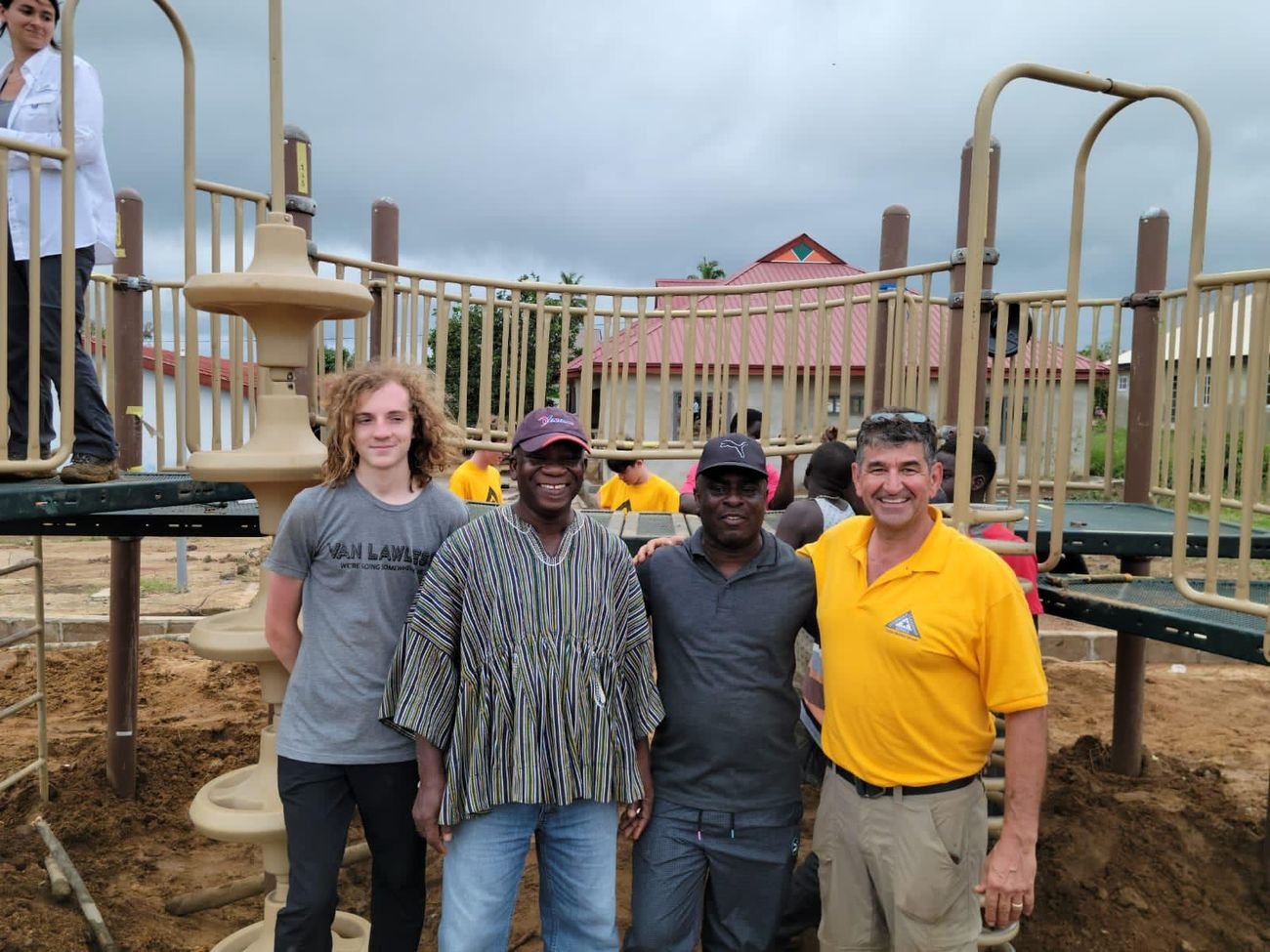
Development, on the ground
Not renderings. Projects commissioned, built and opened in the towns of the traditional area.
Commissioning day — the stool at the ribbonBuilding it — volunteers and community, side by sideFinished — a playground where there was noneThe Council assembled
08
What this coastline gave the world
An improbable record for one short stretch of shore — a philosopher, the financier of independence, and the man who took the Gold Coast out of empire.
c.1703 – c.1759
Anton Wilhelm Amo
Born at Axim
Taken to Amsterdam as a child of about four. Studied at Halle and Wittenberg, took a doctorate in philosophy in 1734, and taught at Halle and Jena, arguing against Cartesian dualism. He came home to the Gold Coast around 1747. Berlin and Stuttgart have streets in his name.
1878 – 1956
George Alfred "Paa" Grant
Born at Beyin
Timber magnate, on the Legislative Council from 1926. In 1947 he founded and financed the United Gold Coast Convention and became its first president — and paid the passage that brought Kwame Nkrumah home from Liverpool.
1909 – 1972
Kwame Nkrumah
Born at Nkroful
Ghana's first president and the century's foremost Pan-Africanist. First buried at Nkroful in July 1972 and reinterred in Accra in 1992; the original grave and the house he was born in were restored and reopened in September 2025.
09
Write to the Council
Enquiries about land, partnership, the festival, research access to the palace archive, or a visit to Atuabo.
The Palace
The Omanhene's Palace Atuabo, Ellembelle District Western Region, Ghana
Seat of the paramountcy
4°59′N 2°33′W
Getting here
From Takoradi, west on the Agona Nkwanta–Elubo coastal road, roughly ninety minutes. Turn for the coast at Esiama.
Research access
The Council's archive — 188 files from the late 1800s — is held at the palace and has been digitised by the British Library's Endangered Archives Programme. Scholars should write in advance.